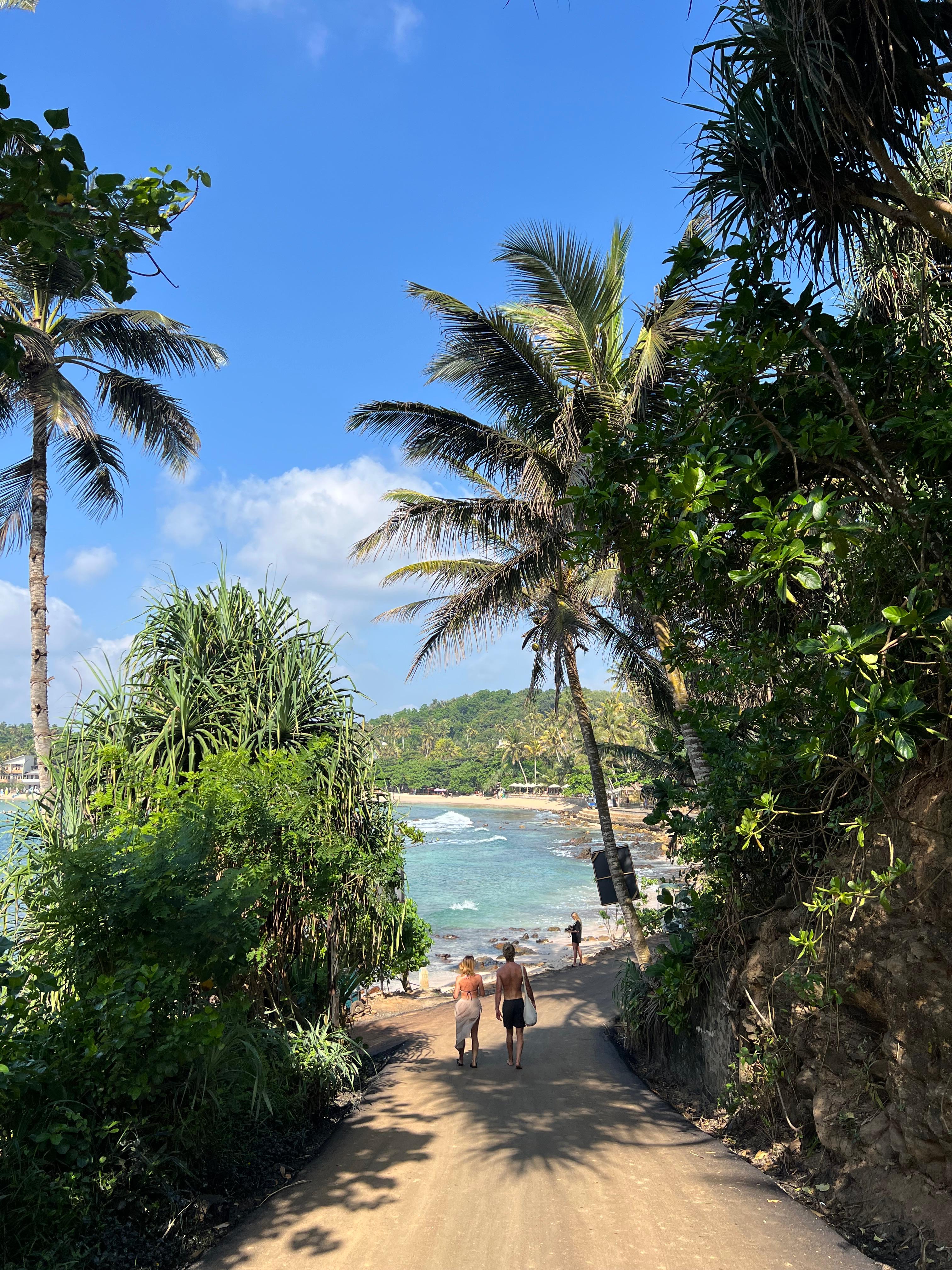
When people talk about the "best time" to visit Hiriketiya, the answer is never straightforward. In the simplest terms: Hiriketiya's high-season lasts from December to April and low-season from May to November — but there are many more layers to the seasons, and it's definitely an all-year-round destination, with different things to offer throughout the whole year. It really depends on what you are looking for.
Sri Lanka is a tropical island with monsoons, intermonsoons, warm temperatures throughout the year, and many local microclimates. This means that even when one part of the island is rainy, another part may be sunny.
Hiriketiya, on Sri Lanka's South Coast, is described as a high-season destination from December to April. This is the time when the South Coast is at its busiest: surf schools are full, cafés and restaurants are lively, yoga classes need to be pre-booked to save your spot, traffic can become slightly hectic, and the bay really feels alive.
But Hiriketiya can be just as much enjoyed outside of the high-season — I would say even more enjoyable. Partly thanks to its horseshoe-shaped bay, the beach is accessible all year round, and it has something to offer for everyone, whether you are coming for surfing, slow living, food, wellness, workshops, or just a warm escape by the ocean.
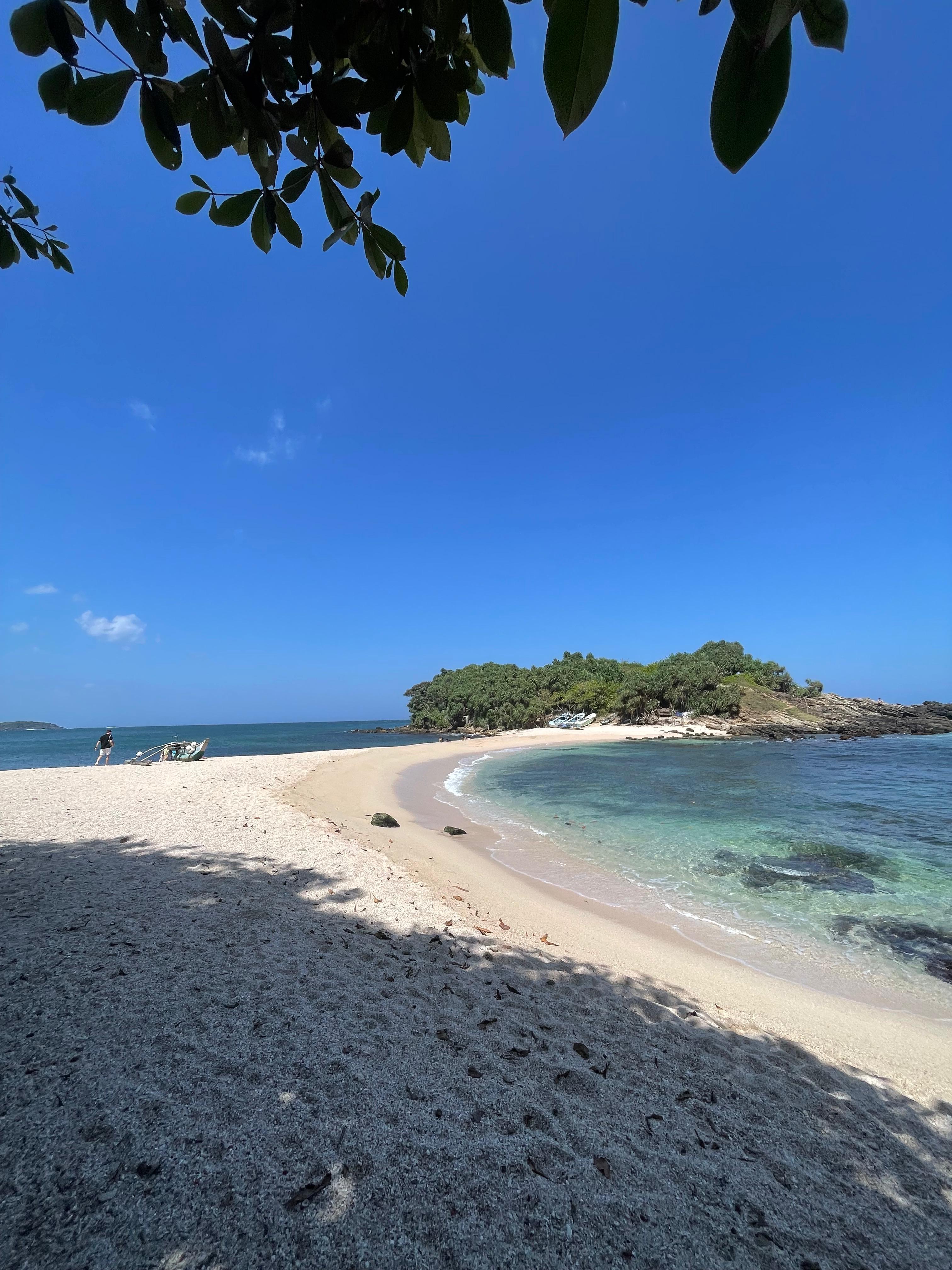
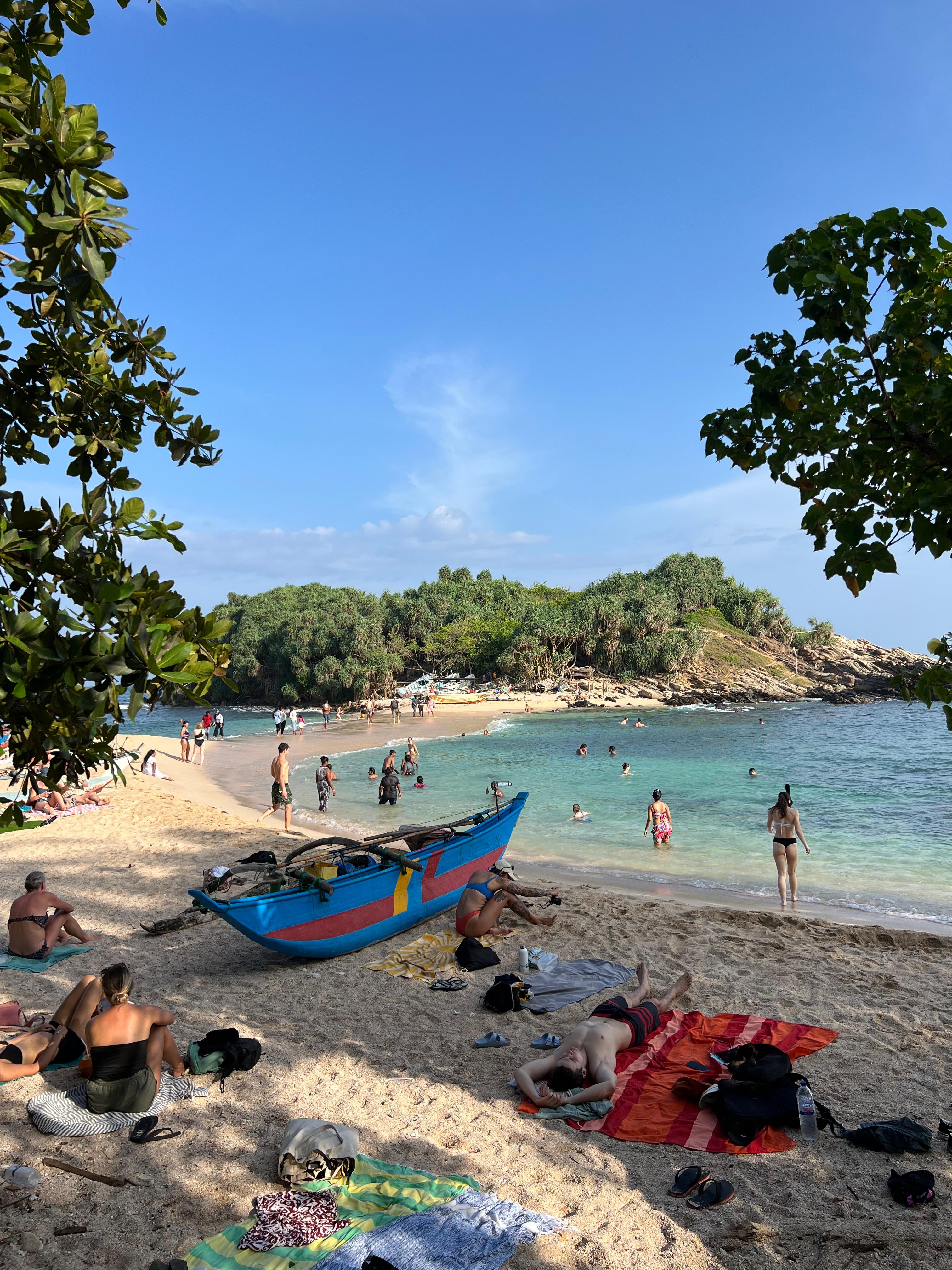
Blue Beach Island on 8th of August & on 4th of January. Source: own archive.
Quick meteorological fact check
Sri Lanka's weather is shaped by two monsoons and two intermonsoon periods, so different parts of the island can have different weather at the same time. Officially, the rainfall seasons are: March–April first intermonsoon, May–September South-West monsoon, October–November second intermonsoon, and December–February North-East monsoon. (statistics.gov.lk)
In simple terms: the South-West monsoon can bring more rain, clouds, wind and a rougher ocean to the South Coast — places like Galle, Ahangama, Weligama and Hiriketiya — while the East Coast, including Arugam Bay, is usually in its sunnier season. The North-East monsoon affects the north and east more, while the South Coast usually has more sunshine and calmer beach weather.
What the official patterns do not always capture is what things actually look like on the ground. From living in Hiriketiya over the last few years, we have seen rainy seasons with plenty of sunny beach days, stormy Decembers, and supposedly wet months that turned out surprisingly dry. Tropical weather does not always follow the rules — but there are patterns that tend to repeat.
Where did "high-season" and "low-season" come from?
The idea of high-season and low-season on Sri Lanka's South Coast comes from a mix of things: weather patterns, international holiday periods, tourism demand, and surf conditions.
From December to April, the South Coast usually has more settled beach weather, cleaner surf conditions, and calmer seas. This also overlaps with winter in Europe, which means many travellers are looking for sunshine. Over time, this created the South Coast high-season.
Sri Lanka's surf calendar is split between coasts: the South Coast is generally more popular from around November or December to April, while the East Coast, especially around Arugam Bay, becomes the main surf destination from around May to September. Because Hiriketiya grew partly around surf, the high-season and low-season terms are really tied to surf conditions rather than just weather in general.
December to February: high-season, busy beaches and the classic South Coast atmosphere
December to February is what most people know as the high-season on the South Coast, with its peak around mid-January until the end of February. This is when Hiriketiya, Weligama, Ahangama, Madiha and other popular beach towns become much busier. Restaurants are open, cafés are full, yoga classes often need to be booked in advance, surf schools are active, and there is a much more social, lively feeling around the coast.
However, one of the biggest misconceptions is that December and January are always dry. In reality, sometimes during the height of the North-East monsoon, heavy winds and unsettled weather systems can cross over the island and impact the south. Some years, December and January can still bring heavy showers, cloudy days, or mixed weather before things become more settled around February.
This is also the busiest and usually the most expensive time of year. Accommodation prices are higher, restaurants are busier, beaches are fuller, and the surf line-up can get crowded, especially in places like Hiriketiya.
December to February is great if you are looking for a lively social atmosphere — a lot is happening at that time: parties, markets, game nights, karaoke nights, all the cafés and restaurants are in full swing and the atmosphere is definitely buzzing and magical, especially if you don't mind a bit of a crowd.
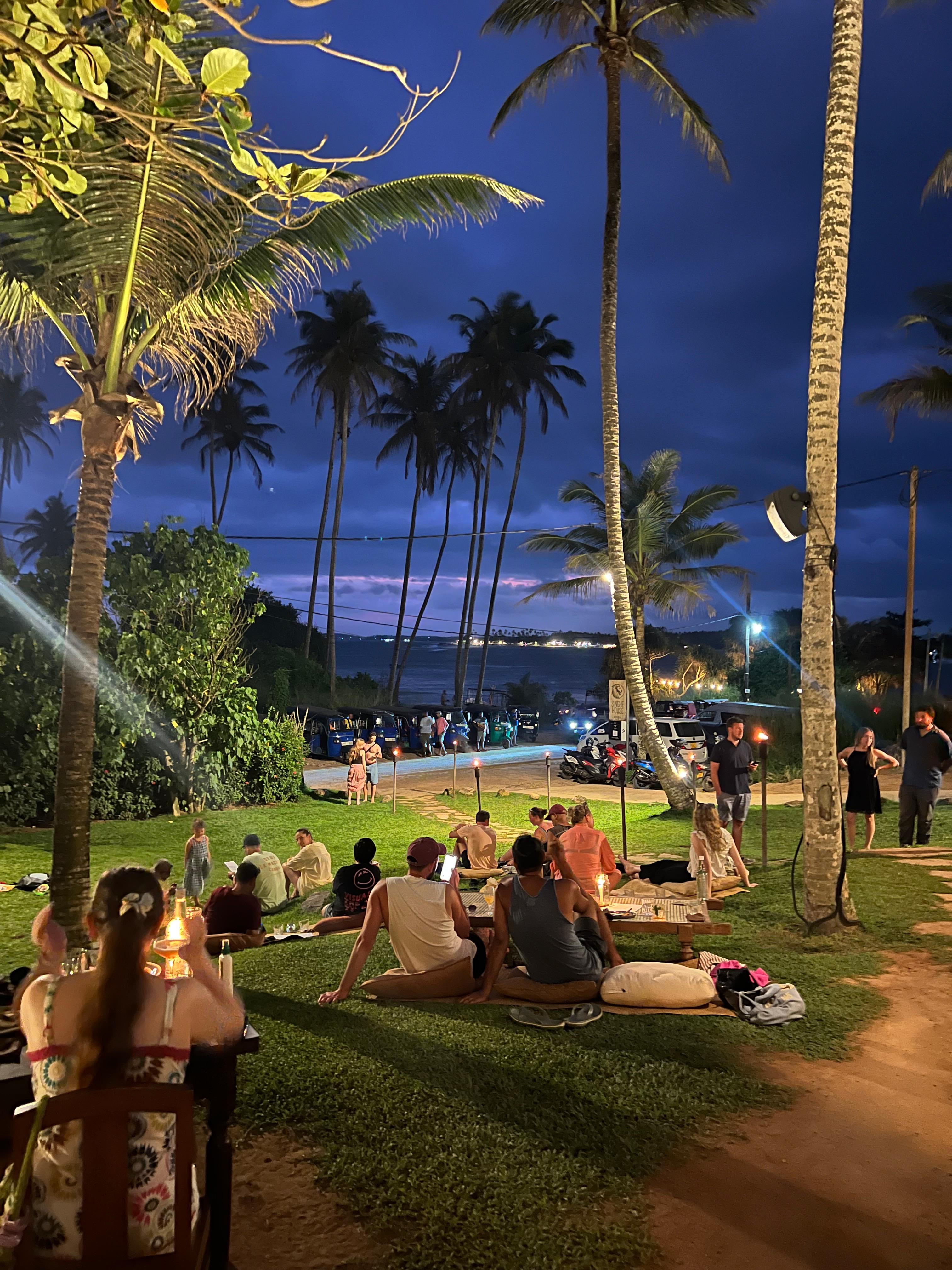
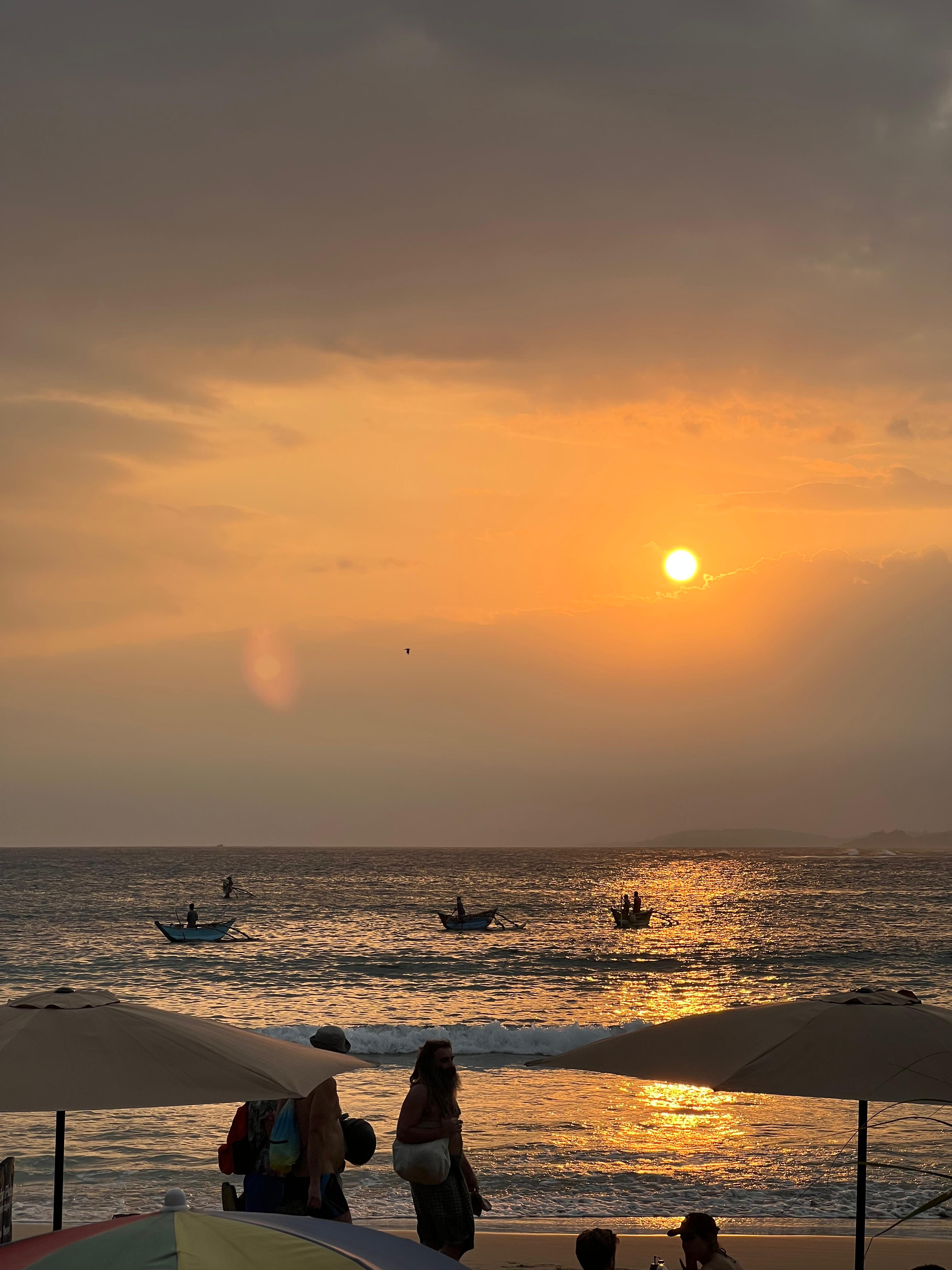
December and January at Hiriketiya.
March and April: hot days, changing skies and the end of high-season
March and April are the months when the South Coast slowly starts shifting out of peak season — sometimes called the shoulder season. Personally, it's my favourite time of year. March can still feel very much like high-season, with good weather, lively cafés, restaurants, surf schools and yoga classes. But compared to January and February, things may slowly start to feel a little less crowded.
Weather-wise, thinking back over the last few years, March and April were the hottest and sunniest months of the year. This is the first intermonsoon period in Sri Lanka, which means less wind, more humidity and therefore some occasional thunderstorms.
For intermediate surfers, March and April can be the best time to visit Hiriketiya. The crowds may slowly become lighter, while the surf conditions are still really enjoyable. The ocean is still calm and settled on most days but there is a bit more power to the waves.
One important thing to keep in mind if you are visiting in April is Sinhala and Tamil New Year, usually celebrated around 13–14 April. This is one of the biggest and most important holidays in Sri Lanka, and it can really affect the rhythm of the island for a few days, or even up to a week. Around this time, many Sri Lankans travel to be with family, beaches can suddenly become much more crowded, and firecrackers fill the neighbourhoods with sound and celebration.
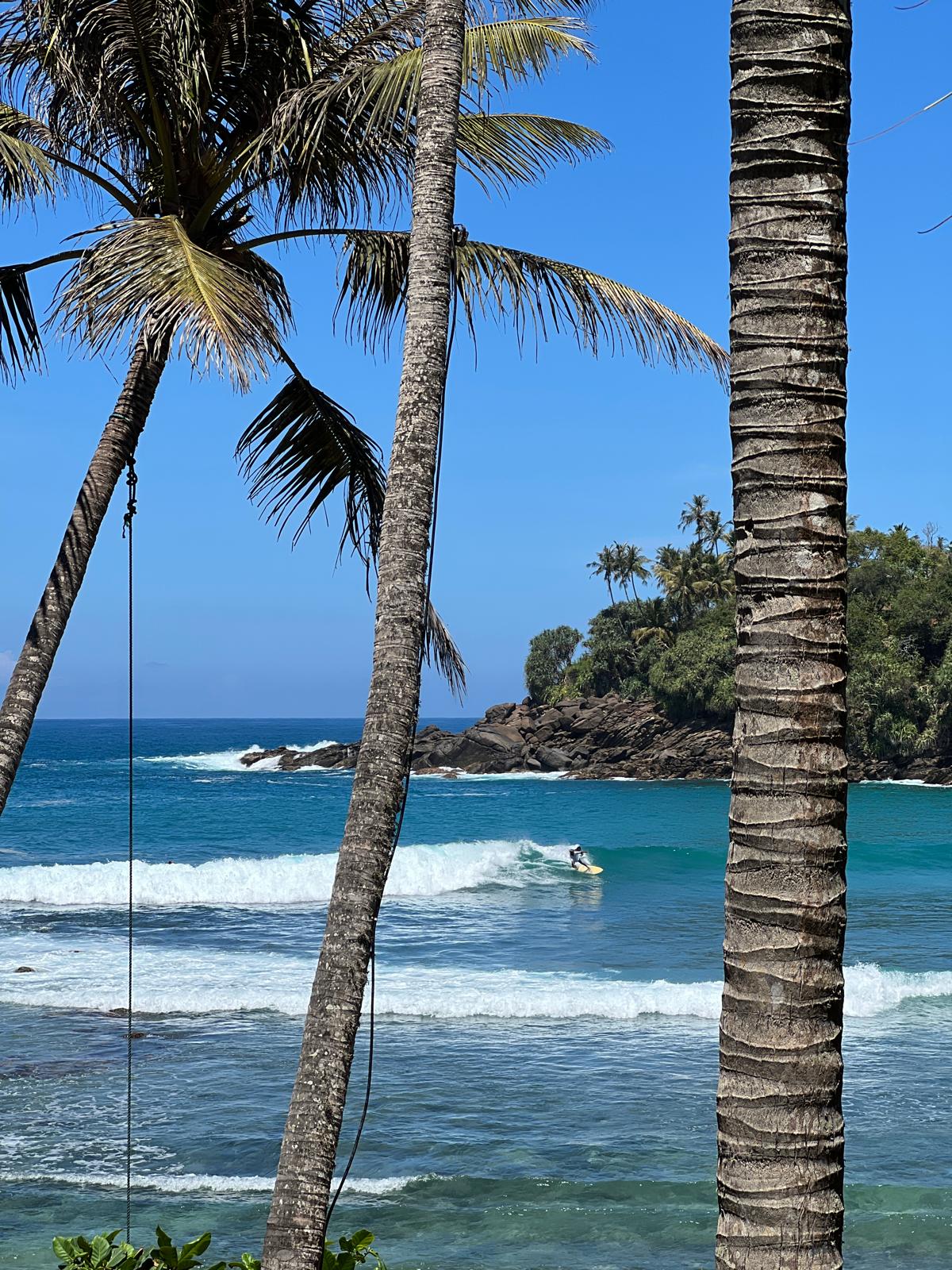
April light at Hiriketiya — the hottest month of the year.
May to July: low-season, green season, slow season
May to July is part of the South-West monsoon season on Sri Lanka's South Coast. This period is most commonly called the "low-season", as things slow down, there are fewer tourists, beaches are emptier, accommodation rates are often lower, and some businesses close for a short break, renovations, or staff holidays.
Another name for this time of year is the "green season", because the extra rainfall makes nature feel incredibly alive. The jungle becomes thicker, the gardens grow fast, and everything feels lush and tropical. Personally, we like to call it the "slow season" — less traffic, less noise, less pressure to book everything in advance, and more space to enjoy the island slowly.
The nice thing about this season is that the sun is usually less intense. For people who do not enjoy extreme heat, or for families with children, this can actually be a more comfortable time to visit. Daytime temperatures usually stay around 24–30°C and the ocean is still relatively warm.
Around Vesak — usually in May — streets, temples and homes are decorated with lanterns, lights and colourful displays. It is one of the most beautiful times to experience a more local and cultural side of the island.
A great activity to do this time of year is a day trip to Udawalawe National Park. While the South Coast is in its greener, rainier season, the Udawalawe area is actually in its dry season — elephants are easier to spot, and the park feels much calmer and less crowded than during the South Coast's high-season.
If peace and quiet is what you are after — and you are open to the occasional tropical shower — May to July is genuinely one of the most rewarding times to visit.
July to September: the South Coast slowly wakes up again
Blue Beach Island in August — quieter, greener, and worth it.
July to September is still technically part of the South-West monsoon season on the South Coast — but in our experience over the last few years, these months have often been much better than people expect.
The weather can be surprisingly good, with many sunny days and only occasional rain showers. The island still feels quieter than high-season, but things slowly start coming back to life. Cafés reopen, restaurants finish renovations, surf schools become more active again, and the South Coast starts to feel a little more awake.
You can still find better accommodation rates, less crowded beaches, and more space in restaurants and yoga classes. For intermediate surfers, July to September can be fun in a different way — the waves may not always be as clean and easy, but with a much less crowded line-up, it can be rewarding.
October and November: shoulder season and changing skies
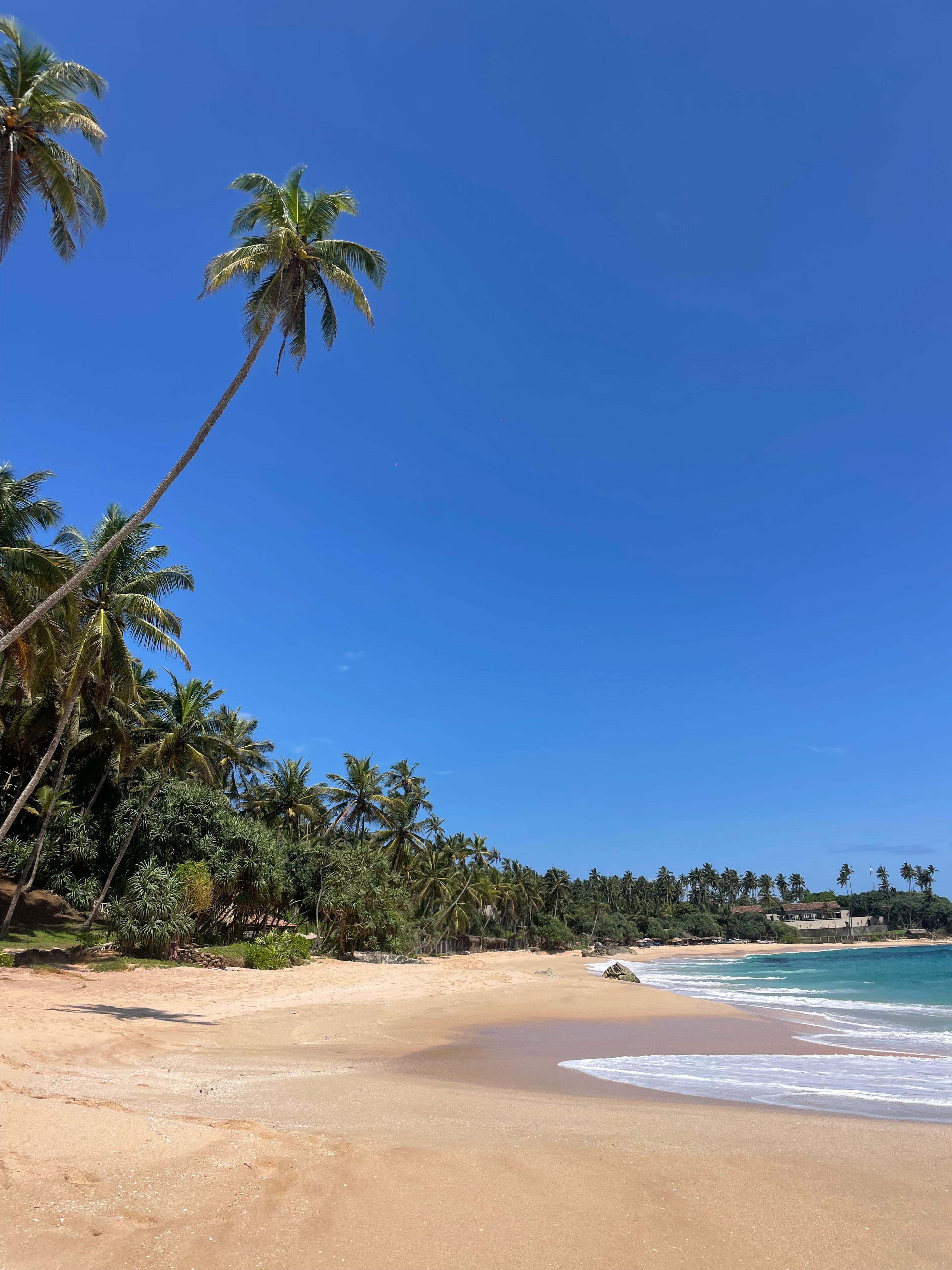
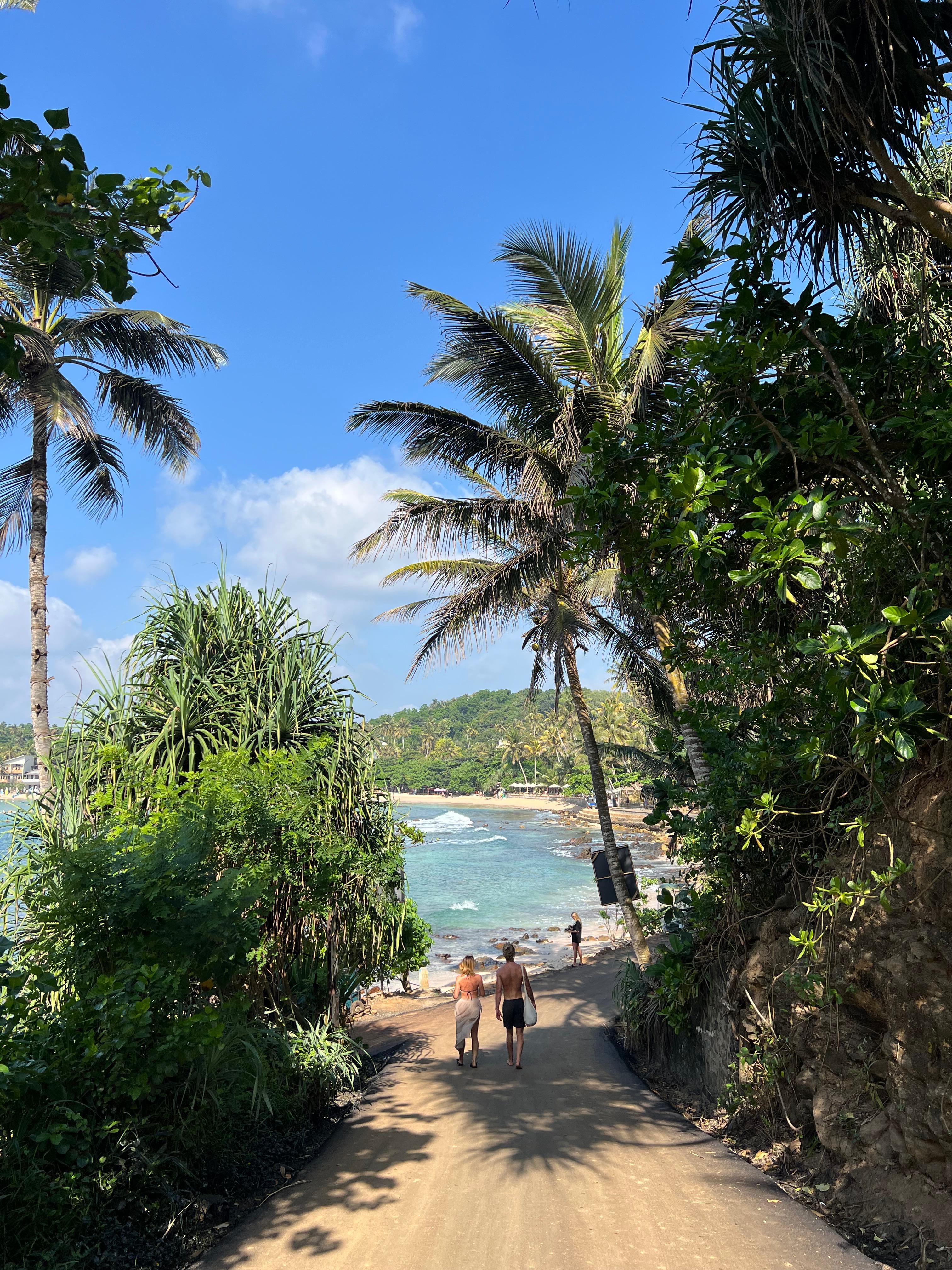
November at Hiriketiya — the season slowly waking up again.
October and November are usually known as the shoulder season on the South Coast. This is when Sri Lanka enters the second intermonsoon period, which can bring rainfall, thunderstorms, and more unpredictable weather across the island.
For places like Hiriketiya, this means the weather can change quickly. You may wake up to sunshine, get a heavy tropical shower in the afternoon, and then have a beautiful sunset in the evening. This is also the time when the ocean often starts to calm down after the rougher monsoon months — the waves can become more consistent again, and the South Coast slowly eases into the high-season for surfing.
For non-surfers, as all the places are usually reopened for the season by this time, you can really enjoy all the cafés, restaurants, yoga, massage, shopping, workshops and retreats without the full peak-season crowds. October and November can offer a really nice balance: more life than low-season, more space than peak season, and a South Coast that feels like it is slowly waking up.
Holidays and celebrations that might affect your stay
Sri Lanka has a rich cultural and religious calendar, and it is worth knowing a few basics before you travel. Every full moon is a public holiday called Poya — on these days, some businesses may close earlier, temples are busier, and alcohol is not supposed to be sold. Sinhala and Tamil New Year in April, Vesak in May, and other public holidays like Poson, Deepavali, and Christmas can all affect transport, opening hours, and how the South Coast feels for a few days.
It is also worth remembering that whenever a public holiday falls close to a weekend, many Sri Lankan families travel to the coast. So even in a quieter month, beaches like Hiriketiya, Weligama, Mirissa and Tangalle can suddenly become much busier for a few days. The best approach is to check ahead, book transport early, and allow a little extra flexibility.
Sri Lanka is always in season somewhere
The most beautiful thing about Sri Lanka is that it is not a one-season destination. Because the island has different climate zones, two coastlines with opposite surf seasons, mountains, rainforest, dry zones, and many local microclimates, you can usually find sunshine somewhere at any time of year.
Hiriketiya changes with the seasons, but it definitely does not become a less good destination outside of high-season. Sometimes it is busy and full of energy. Sometimes it is quiet, green, and slow. Sometimes the waves are gentle, and sometimes they are powerful. That is part of the charm.
So, when is the best time to visit Hiriketiya?
If you are a beginner surfer, December to February is usually the easiest and most comfortable period. The waves are often more mellow and surf schools are fully operating — the only downside is that the beginner line-up can be much busier.
If you are an intermediate or advanced surfer, you may enjoy March, April, October, November, or parts of July to September, depending on the swell. The waves can be stronger and the line-up less crowded, but conditions also become less predictable.
If you are not mainly coming for surfing, the quieter months can be the most rewarding. May to September, and sometimes even October or November if you do not mind some rain, can offer a slower and more peaceful version of Hiriketiya. Think empty beaches, better prices, yoga, massages, long breakfasts, quiet cafés, and warm tropical evenings without the peak-season crowds.
If you want the fullest social atmosphere and the most alive South Coast feeling, January to March is usually the right choice.
I would say: shoulder-season months are the best times to visit (March–April and July–September) if you want to get a bit of everything, with March–April being hotter than July–September.
Sri Lanka is definitely an all-year-round destination — you just need to choose the right rhythm for the kind of trip you want. Hope that helps, and see you in Hiriketiya.